Despite the continuing hot weather the signs of summer’s impending end are evermore apparent. The wheat stands golden and heavy-headed in the fields, the swallows are gathering in increasingly large numbers and the geese are once more in the air, their young safely fledged.
It’s also nearly a year since we moved to the farm and good time to reflect on what we have done and what we have learnt.
The most exciting thing has been confirming in practice what we always believed – that nature is wonderfully resilient and, given the slightest chance, it really can thrive. Linked to this, is an equally positive finding – that even the simplest changes, like putting in a field margin, can bring significant benefits in a short period of time – less than a year in our case.
At the beginning of our journey on the farm, I asked friends who had undertaken similar conservation efforts how we would know if our efforts were actually making difference. They replied that it really would be obvious.
Twelve months in, I can confirm they were right.
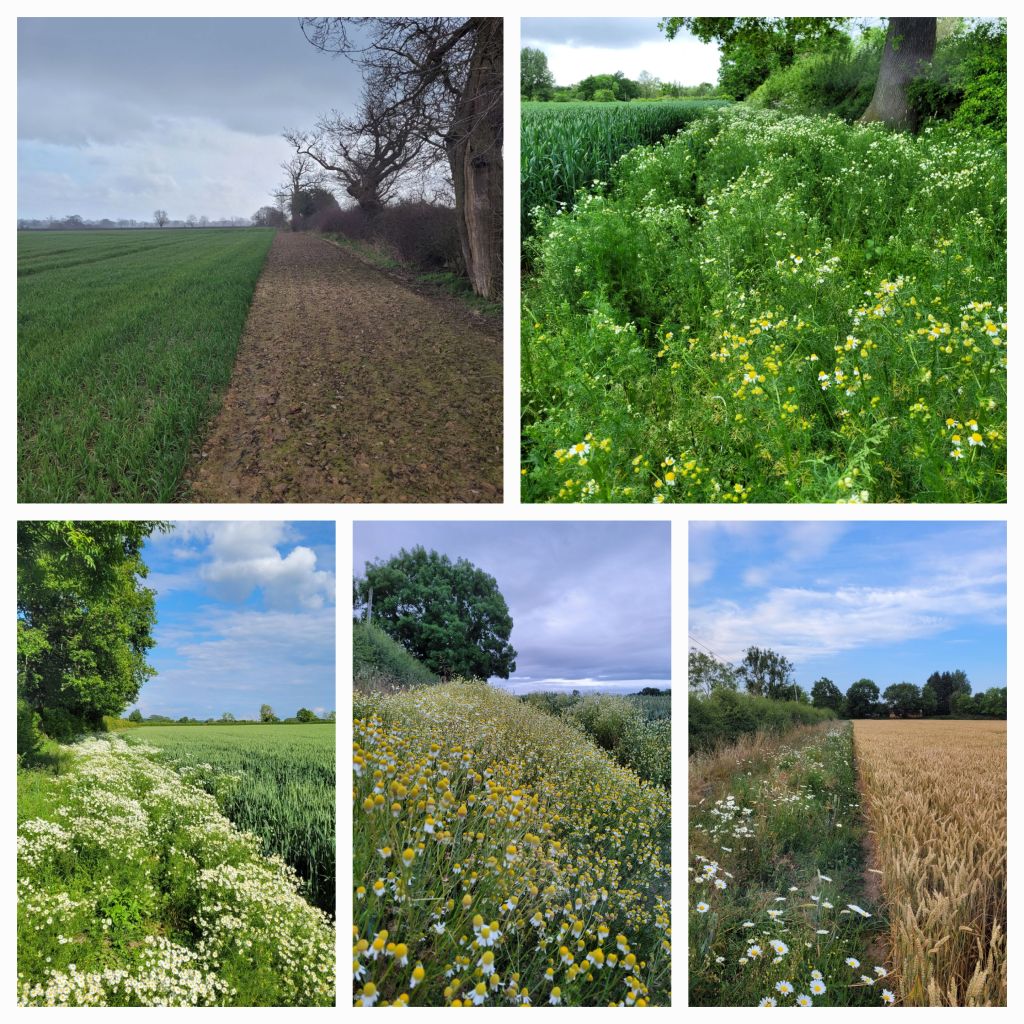
As the photos above demonstrate, the field margins we introduced since arriving are now rich with flowers, insects and birds – having previously been species-poor pasture. We have enjoyed clouds of butterflies (mostly meadow browns and the odd small copper), swarms of hoverflies over the chamomile and the largest flocks of greenfinches I have ever seen.
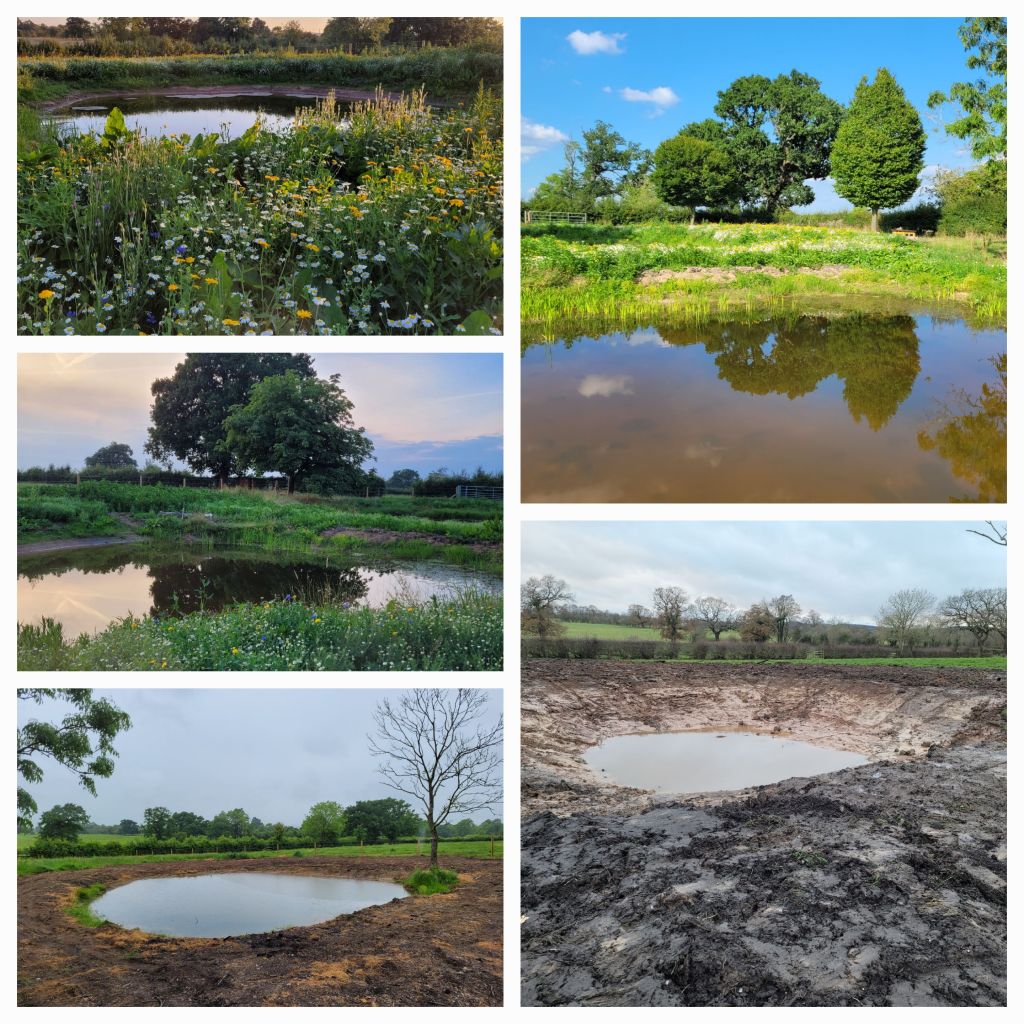
The ponds we dug in December have filled up and, entirely of their own accord, self-populated with aquatic plants and insects and, most importantly, lots and lots of baby newts – which was of course their primary objective! The new wildflower meadow we sowed around our ponds has taken well and is currently a carpet of colourful cornfield annuals, providing a stunning late summer display while sheltering the perennial meadow seedlings that will follow behind. The 500+ trees we planted in February appear to have largely overcome the dry summer weather and are now well out of their protective tubes, while the hedges, left uncut since we arrived, are now laden with fruit that will provide a food source for overwintering birds.
There have been welcome surprises along the way – the appeal of our winter flash to wigeon, teal and shelduck; hearing a cuckoo; discovering the woodland wildflowers under our long-established hedges, and seeing wheatear, red kite and greenshank on our land – none of which are especially rare but would certainly pass as a little less ordinary for our part of the world.
There have of course been setbacks – or at least slower-than-hoped for progress – most notably our barn owl box which, so far, does not seem to have attracted an occupant, and of course the wasteful demise of the nesting lapwings over our boundary. Overall however it’s been an inspiring year of progress that confirms our belief that British nature is enormously resilient given half a chance and that with a little compromise and common sense, a successful balance between modern farming methods and conservation can be found that really does work.
Looking to the future, our Mid-Tier stewardship application has now been submitted, and sets out our plans to progressively move the farm grasslands to species-rich herbal leys – providing nutritious and drought resistant grazing for our cattle, building long term soil health, while also helping insects, pollinators and birds. We will soon be planting out wildflower plugs in one of our smaller meadows to add species diversity, and introducing an autumn sown bumblebird mix on another. Nesting lapwing on the land remains an objective, albeit one that is probably a couple of years away yet, being dependent on getting our herbal leys established and introducing an early Spring grazing regime. Still, this year has proven they are around so there is every reason to be hopeful.
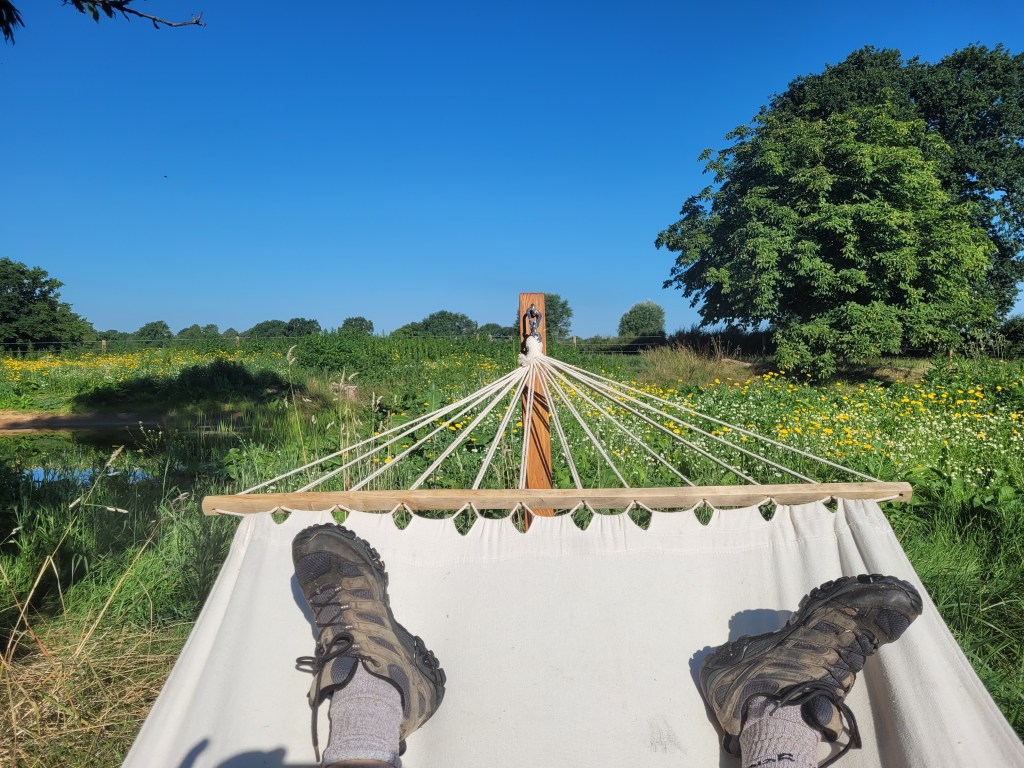
In the meantime, while the summer is still with us, it’s important to take time to enjoy the fine weather and reflect on a wonderfully rewarding and inspiring first 12 months – where better than in a hammock amongst the wildflowers!
 Hope for the Lappinch
Leave a comment