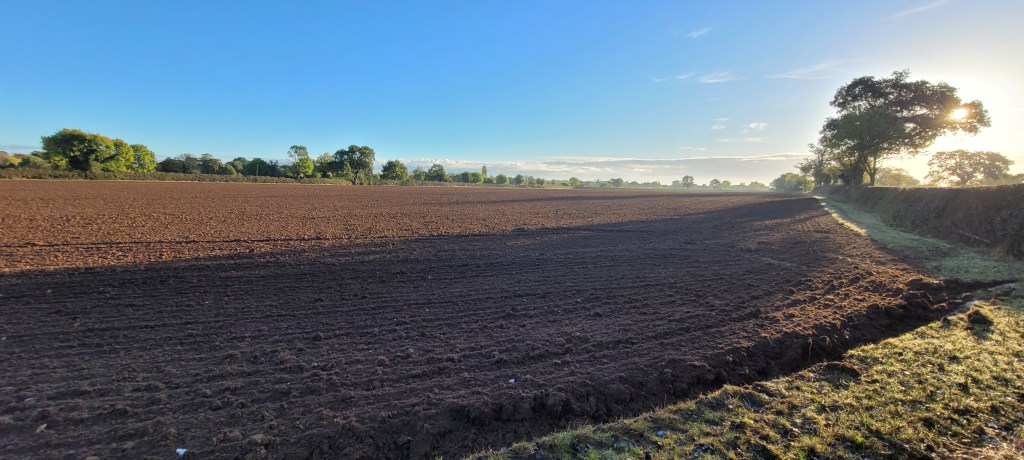
So, it is done. Probably the single most dramatic project we shall do in our time on the farm has taken its first step.
Central to our philosophy is the idea that you can farm properly while also creating space and opportunity for wildlife. Indeed, while managing land solely for conservation and rewilding schemes have their place (and an inspiring one at that), only by finding ways to combine successfully the best of modern farming practices with the needs of wildlife do we think humanity can ever hope to achieve more than a marginal improvement in biodiversity – against the pressures of global population growth, increasing consumerism and climate change.
The introduction of herbal leys on the farm appears to provide us with exactly this opportunity.
So what exactly are they and why do we want to introduce them?
Often described as a fertiliser merchant, food manufacturer and vet all in one, herbal leys are swards containing a mixture of up to 17 different species including nitrogen fixing legumes, deep rooting herbs, wildflowers and grasses that, together, offer a range of benefits to forage quality, livestock health, drought resilience, improved soil fertility, wildlife and pollinators.
This contrasts with the conventional and rather tired rye grass-dominated swards that we found on our arrival on the farm which contain only a very limited number of species and typically require high quantities of expensive, carbon-intensive fertiliser to remain fully productive.
So far, so good you might think – what is there not to like?
Well, it seems that herbal leys (not dissimilar to our field margin – see post of 13 March 2022) are rather fickle things and somewhat difficult to establish. Having consulted widely, numerous well-informed sources told us that if we want to succeed and avoid an unproductive mess of thistles and docks, we would need to start with a clean seed bed. The best way of achieving this, would be to plant a crop of winter wheat before sowing the leys immediately post-harvest next summer.
So, with this in mind, our land has gone under the plough.
It’s certainly dramatic and, candidly, somewhat unsettling to see our green fields changed to brown. The carbon footprint of ploughing, not to mention the chemicals associated with modern arable farming are none too appealing either.
However, after careful reflection, we think that the long-term benefits of establishing herbal leys should outweigh the near-term costs of what we are doing. We also take comfort from the areas we have already set aside for wildlife over the last year, and a newly sown acre of “bumblebird” mix we have put in to provide flowers for pollinators next summer and, thereafter, seed for overwintering birds.
It is certainly a dramatic change and, as with everything in farming, a positive outcome is not guaranteed. However, having done our research carefully, we are confident we are doing the right thing. That said, given the time scales involved, it won’t be until mid-2024 when the leys are (hopefully!) established and the cows are back that we will know if we are right. Watch this space!

 Hope for the Lappinch
Leave a reply to Eva Taylor Cancel reply